Semax
20% off · active now- 99%+ HPLC purity — Third-party tested, every batch
- COA for every lot — Download the full report below
- Lyophilized for stability — Packed to arrive intact
- Ships from Charleston, SC — Fast domestic shipping
- Class
- Research peptide
- Application
- Research use only
- Form
- Lyophilized powder
- Storage
- −20 °C long term
- Purity (HPLC)
- 99%+ third-party verified
- Origin
- Ships from Charleston, SC
Phantom Peptides’ Semax Product Specifications
| Product name | Semax |
|---|---|
| Peptide class | Research peptide |
| Strength | 10mg |
| Purity | 99%+ HPLC verified |
| Form | Lyophilized powder |
| Testing | Third-party tested |
| Documentation | Certificate of Analysis available |
| Storage | −20 °C long term |
| Application | Research use only |
| SKU | 23 |
Semax 10mg – Synthetic Research Peptide
Semax is a synthetic heptapeptide first synthesized by Russian research institutions in the 1980s, engineered as an analog of the endogenous ACTH (4-10) fragment. Its sequence, Met-Glu-His-Phe-Pro-Gly-Pro, reflects targeted structural modifications intended to improve resistance to enzymatic breakdown relative to the native ACTH fragment it's derived from. A substantial body of biochemical and cellular neurobiology literature has examined this compound.
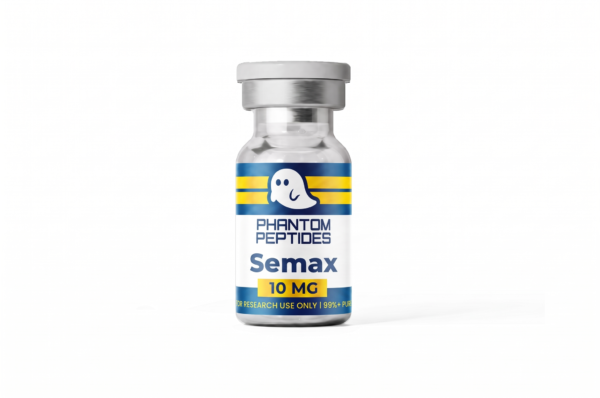
Each vial ships with 10mg of lyophilized Semax sealed in a 3mL glass vial, backed by Phantom Peptides' internal verification standard: independent third-party lab analysis.
Product Specifications
- Compound: Semax
- Class: Synthetic heptapeptide / ACTH (4-10) analog
- Sequence: Met-Glu-His-Phe-Pro-Gly-Pro
- Molecular Weight: ~813 Da
- Form: Lyophilized powder
- Vial Size: 10mg / 3mL glass vial
- Purity: 99%+, confirmed via HPLC and mass spec (COAs available)
Research Background
The existing literature on Semax spans a handful of distinct research threads:
- Neuronal signaling research: how the peptide interacts with signaling pathways in cultured neuronal cell models
- BDNF/neurotrophin pathway studies: cell culture work looking at downstream effects on brain derived neurotrophic factor signaling
- Melanocortin receptor pharmacology: binding profile studies on ACTH fragment derived peptides at melanocortin receptors
- Structure stability research: side by side comparisons of Semax against native ACTH (4-10), focused on how the sequence modification changes half-life and degradation resistance
- Oxidative stress models: cellular response studies in neuronal models exposed to oxidative conditions
- Comparative peptide research: Semax examined alongside structurally related research peptides in cell based studies
Development traces back to the Institute of Molecular Genetics at the Russian Academy of Sciences, with the deepest body of published work coming out of the Myasoedov lab and affiliated Russian peptide research groups. For primary sources, PubMed (pubmed.ncbi.nlm.nih.gov) and NIH's PMC database (pmc.ncbi.nlm.nih.gov) index the peer reviewed literature on Semax and ACTH derived peptide research.
Important Notice
Phantom Peptides supplies Semax strictly for laboratory research. It is not intended for human or veterinary use, and no dosage or administration guidance is provided. Any discussion of biological activity refers only to published preclinical or in vitro research.
Why buy from us
Every vial of Semax we ship is backed by third-party analytical testing and a certificate of analysis you can read before you order. We focus on a short list of research compounds so each one gets the attention it needs.
- Third-party verified. Each batch is tested by an independent laboratory for purity and identity.
- Published COAs. The report for the current batch is linked on this page.
- Consistent supply. Lyophilized, sealed and labeled with batch information for traceability.
- Real support. Questions about an order or a document? Our team answers from Charleston, SC.
Storage
Before reconstitution
Store the lyophilized powder at or below 8 °C in a dry place, away from light. For long-term storage, keep it frozen at −20 °C.
After reconstitution
Refrigerate at 2–8 °C and use within 30 days. For longer preservation, aliquot and freeze at −20 °C, and avoid repeated freeze–thaw cycles.
Shipping
Orders ship from Charleston, SC with tracking on every package. Vials are packed to protect them in transit, and you can check estimated delivery times for your state on the shop page.
- HPLC testedIndependent lab verified
- COA every batchPublished and downloadable
- 99%+ purityConfirmed per lot
- Ships from Charleston, SCTracked domestic delivery
- Lyophilized powderSealed for stability
- Research use onlyNot for human consumption
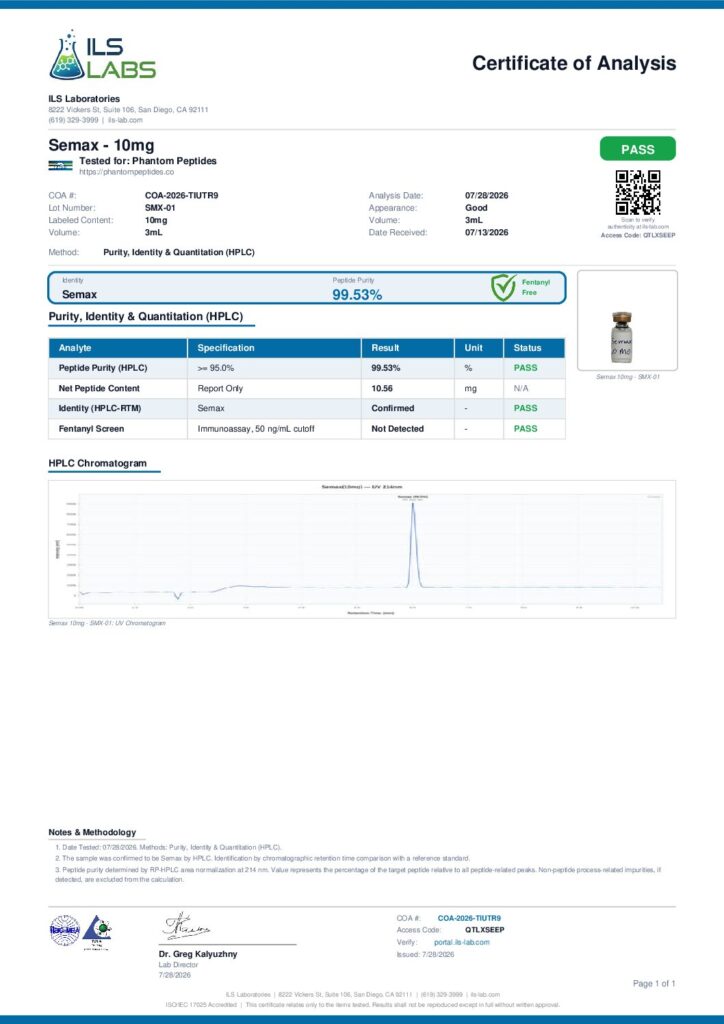
Certificate of Analysis
The certificate of analysis for Semax is not ready yet.
Every batch of Semax is independently tested before shipment. The full analytical report is available to download.
Lab analysis — independent third-party testing
| HPLC purity | 99%+ |
|---|---|
| Identity (mass spectrometry) | Confirmed |
| Appearance | White lyophilized powder |
| Testing | Independent third-party laboratory |
| Documentation | Full COA (PDF) below |
Certificate of Analysis
Verified- HPLC purity: 99%+
- Identity (mass spectrometry): Confirmed
- Appearance: White lyophilized powder
- Testing: Independent third-party laboratory
Why Researchers Choose Phantom Peptides
Not all peptide vendors hold themselves to the same verification standards.
| Verification standard | Phantom Peptides | Generic vendors |
|---|---|---|
| HPLC purity analysis | 99%+ every batch | Often not disclosed |
| Mass spectrometry identity | Confirmed | Rarely available |
| COA published and downloadable | Every lot | Inconsistent |
| Batch-labeled vials | Yes | Sometimes |
| Ships from the USA | Charleston, SC | Often overseas |
| Research-use labeling | Clear on every vial | Varies |
Frequently Asked Questions
1. Is Semax supplied as a lyophilized powder?
Yes. Semax ships as a lyophilized (freeze-dried) powder, which removes moisture and helps keep the compound stable until it is reconstituted for research.
2. How is the purity of Semax verified?
Each batch is tested by an independent laboratory using HPLC for purity and mass spectrometry for identity. The certificate of analysis for the current batch is linked on this page.
3. What does 99%+ HPLC purity mean?
High-performance liquid chromatography separates a sample into its components. A 99%+ result means the target compound makes up at least that percentage of the measured sample.
4. How should Semax be stored before reconstitution?
Keep the sealed vial at or below 8 °C in a dry place, away from light. For long-term storage, keep it frozen at −20 °C.
5. How long is Semax stable after reconstitution?
Refrigerated at 2–8 °C, use within 30 days. For longer preservation, aliquot and freeze at −20 °C and avoid repeated freeze–thaw cycles.
6. Can I see the COA before I order?
Yes. The full COA is available to download in the Certificate of Analysis section above, and on our COA page.
7. Is Semax intended for human use?
No. Semax is sold for laboratory research use only. It is not for human or veterinary consumption, and we do not provide dosage or administration guidance.
8. Where do orders ship from?
All orders ship from Charleston, SC with tracking.
Researchers Also Order
Compounds researchers often add to an order with Semax.
-
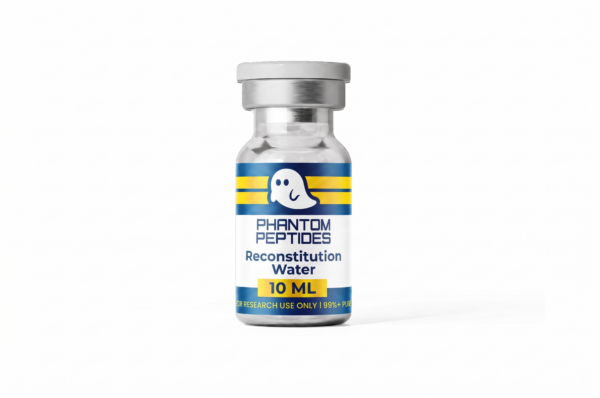
Reconstitution Water 0.9% Alcohol
$ 10.00 $ 10.00 per vial $ 8.00 with code META20
-
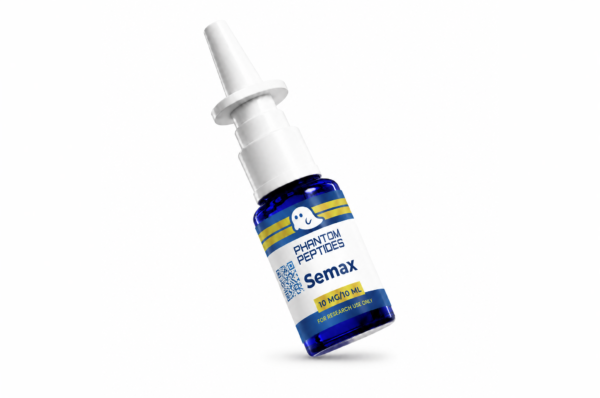
Semax Research Spray Kit
$ 52.00 $ 52.00 per vial $ 41.60 with code META20
-
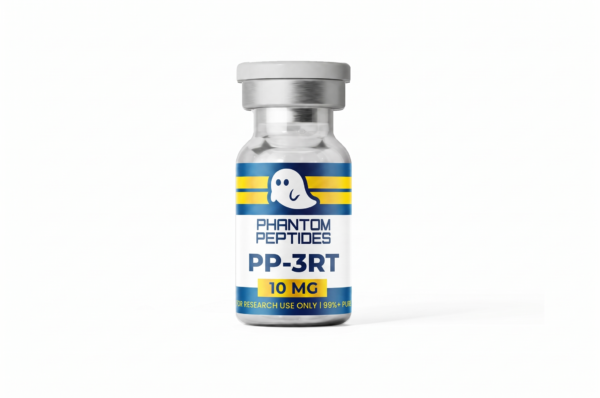
PP-3RT
$ 64.00 $ 64.00 per vial $ 51.20 with code META20
-
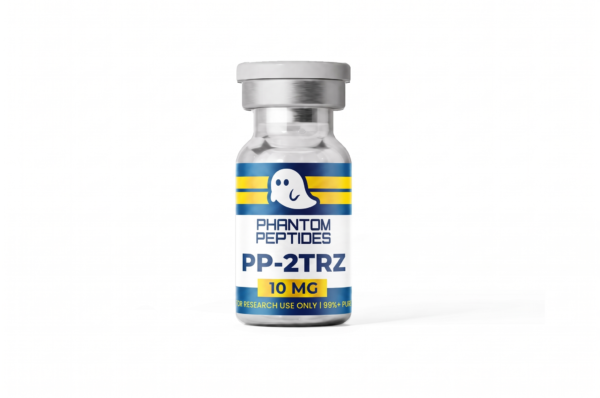
PP-2TRZ
$ 59.00 $ 59.00 per vial $ 47.20 with code META20